
The availability spreadsheet is the biggest invisible bottleneck in OOH.
It never fails, never throws an error and never complains. Which is exactly why nobody notices it is the one piece of the operation that connects to nothing.
· Hivestr · 43 views
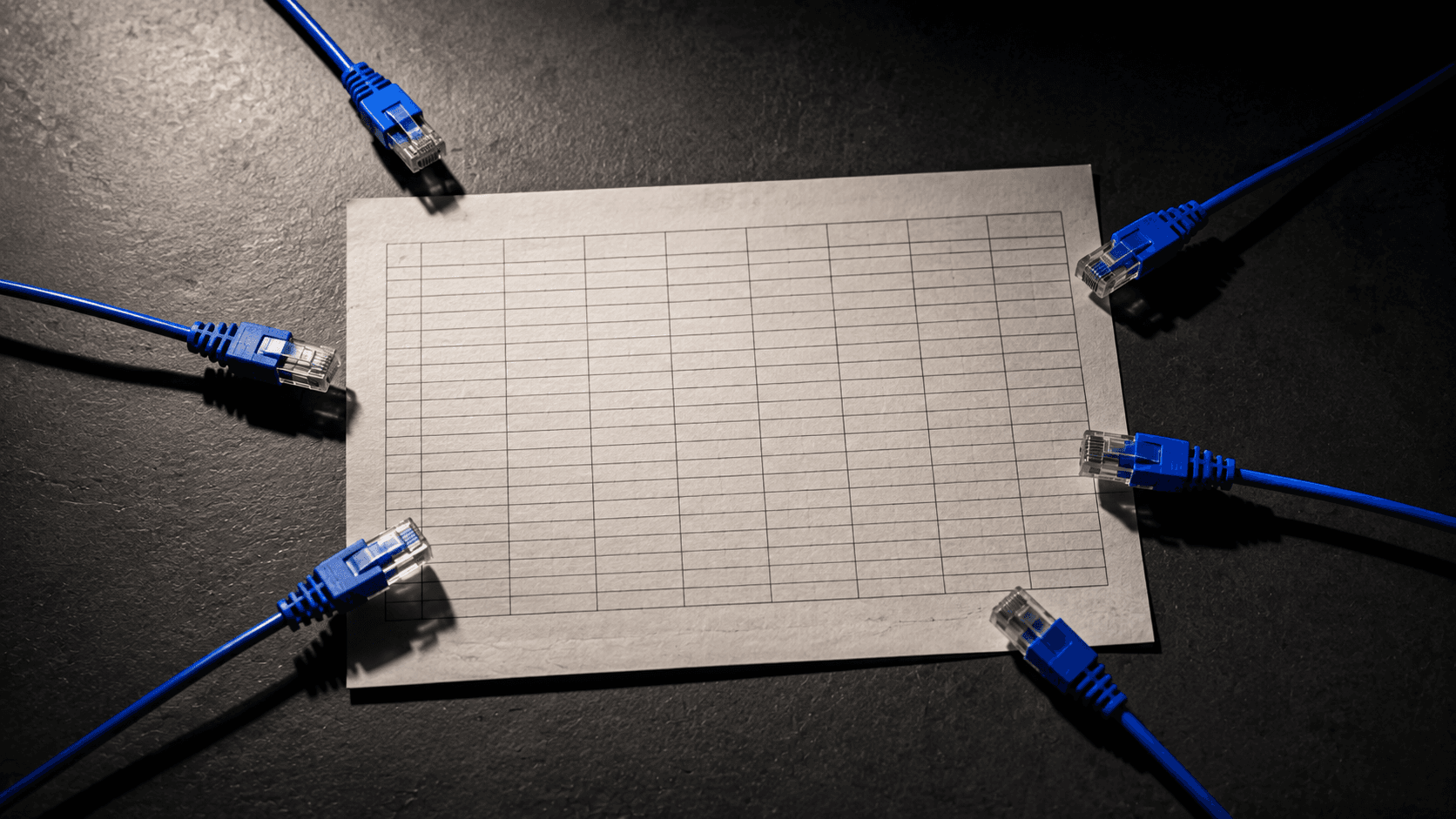
Every Friday, in hundreds of out-of-home operations, somebody opens a file and updates occupancy. New version saved, file sent round to the team, and the whole company spends the following week making decisions based on that document.
It is the most stable process in the entire operation. It never fails, never throws an error, never complains. Which is exactly why it is the most expensive and most invisible bottleneck in the industry.
This article is not about spreadsheets being a bad tool. They are excellent at what they do. It is about the spreadsheet being the one piece of your operation that cannot be connected to anything else.
Your website, proposals, media kit, marketplaces, agencies, finance and field operations are all integrable by nature. The spreadsheet is where the chain breaks, and it breaks silently, because it keeps working perfectly for internal use.
Availability is not a fact. It is an assertion
Start with the most important and least obvious difference between a spreadsheet and a database, and it has nothing to do with features or interface.
In a database with reservation control, when someone tries to book a face that is already booked, the system refuses. There is exactly one possible state for that asset in that period, and it is enforced by construction. The conflict surfaces immediately, in front of whoever caused it.
In a spreadsheet, none of that exists. Two people on the same team can hold contradictory truths about the same face, at the same time, in complete good faith. One opened Friday's version, the other got an update by message on Tuesday. Neither is lying, neither is careless, and the system tells nobody.
That changes the nature of what you are holding. The spreadsheet does not store availability. It stores somebody's opinion about availability, frozen at a moment in the past. As long as everyone is looking at the same file at the same time, the difference does not show. The moment the operation grows, it becomes the main problem.
The half-life of the truth
There is a property of stale data that almost nobody in the industry measures, and it explains why the damage is always underestimated.
The error is not constant across the week. It grows.
| Moment | State of the data | What actually happens |
|---|---|---|
| Friday afternoon | Reliable | The information matches reality. Anyone can promise anything. |
| Monday | Acceptable | One or two Friday sales have not landed yet. Small, tolerable error. |
| Wednesday | Doubtful | The salesperson no longer trusts it. Calls to confirm before promising anything. |
| Thursday | Fiction | The file describes an operation that no longer exists. And this is when most deals close. |
Notice the cruel detail in that table. The data is most reliable precisely when nobody is using it, and least reliable on the day the sales team pushes hardest to close before the weekend. The sale that hurts most is always the Thursday one.
No media owner can answer the question: how many days has it been since my availability data was true? Not because it is hard to calculate, but because the question has never been asked. And what is not measured never enters an investment decision.
Every downstream system inherits the lie
If the problem stopped at the spreadsheet, it would be manageable. It does not stop.
Availability is the most reused piece of data in your company. It is the raw material for nearly everything that leaves the operation, and every consumer of that data inherits its errors in full.
- The answer to the client. That first response, where speed decides who wins the order.
- The proposal. Which goes out listing sites as open and turns into an embarrassment if one has already been sold.
- The media kit and the map on your site. Which sit in public and go stale without anyone noticing.
- The contract and the authorization. Which formalize whatever the proposal promised.
- The print production order. Which incurs real cost before any revenue lands.
- The field crew schedule. Which sizes people and vehicles for the week.
- The revenue forecast. Which drives cash and investment decisions.
Seven consumers, one source. And here is the most perverse effect, the one that appears when a media owner finally invests in technology without fixing the foundation first.
An inventory map on your website, fed by an unreliable base, is not progress. It is your error published on the internet, available around the clock, to an audience you do not control.
Why nobody sees the bottleneck
If the problem is this large, the obvious question is why it never comes up in a management meeting. The answer is that it never manifests in concentrated form.
A broken machine halts the operation and everyone sees it. A stale spreadsheet produces damage diluted across dozens of small events that nobody adds up.
The double booking
Rare, painful and memorable. Everyone remembers the time it happened. Precisely because it is rare, it gets treated as an isolated accident rather than a symptom.
Slow response
Daily and invisible. The salesperson will not promise without checking, checking takes hours, and the client who asked three companies books with whoever answered first. Nobody logs that loss.
There is a third cost, quieter than both. The face that sat idle because nobody noticed it had come free. The spreadsheet does not flag that a site has been open for six weeks. It simply reports that it is open, with the same neutrality it reports everything else.
Add the three together and you have material damage, spread across events too small to trigger a reaction. That is the precise definition of an invisible bottleneck.
What buying automation actually requires
It is worth bringing in the perspective of the people building the automated buying infrastructure for out-of-home.
In a piece published by the OAAA, Ari Buchalter, CEO of Place Exchange, breaks a traditional OOH buy into five manual processes: inventory selection, pricing determination, creative approval, campaign trafficking and reporting. His example is a hundred thousand dollar budget spread across 150 displays from seven different media owners, and the core point is that each of those five processes has to be repeated separately with every media owner, multiplying the complexity.
Note which one comes first. Inventory selection. It is the entry gate, and it is the one that depends on machine-readable availability. If your data does not clear that first filter, the other four processes never happen at all, however good your site is and however competitive your price.
The same piece explains why OOH stayed historically isolated from the rest of the media plan. The channel accounts for roughly 3% of ad spend and sat segregated from the other 97%, largely because its processes, tools and data were foreign to those used in other channels. It was never a question of media quality. It was infrastructure incompatibility.
Buchalter also draws a distinction that matters directly to media owners. Automation and programmatic are not the same thing: automation removes effort, time and cost from the process but does not change the campaign's outcome, while programmatic adds a layer of rules-based decisioning aimed at a business result. He sums the second up as automation plus intelligence.
That distinction is liberating for a regional operator. You do not need to wait for programmatic to reach your market to benefit from this. Automation alone already cuts effort, time and cost, and it requires exactly one thing: a single source of truth about every face. The return on fixing your foundation does not depend on any trend maturing.
Worth noting too that the piece observes this normalization of workflow and measurement, already established in DOOH, has been extending to static inventory as well. Print is not outside this conversation. It is behind it.
What a single source of truth means, concretely
The term sounds abstract, so it is worth translating into requirements. A single source of truth about inventory has six characteristics, and the last one separates internal tidiness from connectable infrastructure.
- One record per face, with its own identifier. Not two rows for the same asset, not the same face under two names in different tabs.
- Occupancy by period, not by state. A face is not open or booked. It is open in some periods and booked in others, and that is the only useful way to store it.
- Concurrent writing without overwrites. Two people working at once cannot erase each other's work without anyone knowing.
- Holds with an expiry. A temporary block for a live negotiation is different from a confirmed sale, and that difference has to exist in the system, not in the salesperson's head.
- Change history. Who changed what and when. Without it, there is no possible conversation when something goes wrong.
- Machine-readable, not just human-readable. If only a person can interpret the file, it connects to nothing, and everything above loses its usefulness.
Notice that the first five are about internal reliability and hold true even for someone with no intention of connecting to any marketplace. The sixth is what turns an organized operation into a connectable one.
Getting off the spreadsheet without halting the business
Migration usually fails not for technical reasons, but because of one specific and very common trap.
Freeze the spreadsheet
Set a date and an owner. From then on it becomes a historical reference and nobody writes to it again.
Migrate with one owner
One person responsible for the initial load and for checking face by face. Shared migration multiplies errors rather than reducing them.
Actually shut it off
This is the step most people skip. As long as the spreadsheet survives as an alternative, somebody will fall back to it under pressure.
The trap is step three. Most operations finish the migration with the system and the spreadsheet coexisting, and that state is worse than either one alone. With one source you have data that might be wrong. With two you have two divergent versions, no tie-breaker, and double the work of maintaining both.
Ask two people on your team, separately, about the availability of the same face in the same period. If the answers differ, or if both need to check somewhere before answering, you do not have a single source of truth. You have an informal agreement that works until it stops working.
What a spreadsheet will never be able to do
Worth closing by acknowledging its merits, because the spreadsheet is nobody's villain.
It is flexible, cheap, universal and requires no training. It handled inventory control for practically the entire industry for decades and remains an excellent tool for analysis, for modelling and for drafting.
What it cannot do is be queried by another system. And that is the one thing that has become mandatory. Every other link in the chain, from your website to the agency, from the marketplace to finance, was built to talk. The spreadsheet was built to be read by a person, and that is where the chain breaks.
The bottleneck is invisible because the spreadsheet never fails visibly. It delivers, with perfect reliability, information that may not be true. And as long as the operation is small enough to fit in one person's head, that will not hurt enough to become a priority.
The question left standing is not whether your spreadsheet works. It is how many days a week it is telling the truth, and what the difference costs you.
Source cited: OAAA, The Difference Between Programmatic and Automation, by Ari Buchalter, CEO of Place Exchange, published May 2023 and maintained in the association's programmatic resource collection.
Additional context: OAAA, Programmatic Resource Center, which hosts the Programmatic OOH Transparency Pledge, a standard developed by the association with programmatic stakeholders to strengthen trust and clarity in transactions.
Your availability cannot have two versions.
Occupancy control by period and by face, temporary holds separated from confirmed sales, change history, an embeddable map and media kit fed from the same base, interactive proposals and proof of posting. Built for OOH, DOOH, TV and radio media owners. Free 7 day trial, no credit card required.
Explore Hivestr · 7 days free →Your media company's whole operation
Inventory, proposals with online approval, CRM, campaigns, proof of posting and finance in one account. 7 days free to try.
Subscribe to the Hivestr newsletter
Get tips, OOH/DOOH industry news, and Hivestr content straight to your inbox.