
The agency opened your proposal at 10 p.m. You only found out on Friday.
A PDF sent by email or WhatsApp is a blind proposal. Learn to read interest signals, follow up at the right moment and shorten the 6 to 10 rounds of back and forth until approval
· Hivestr · 7 views
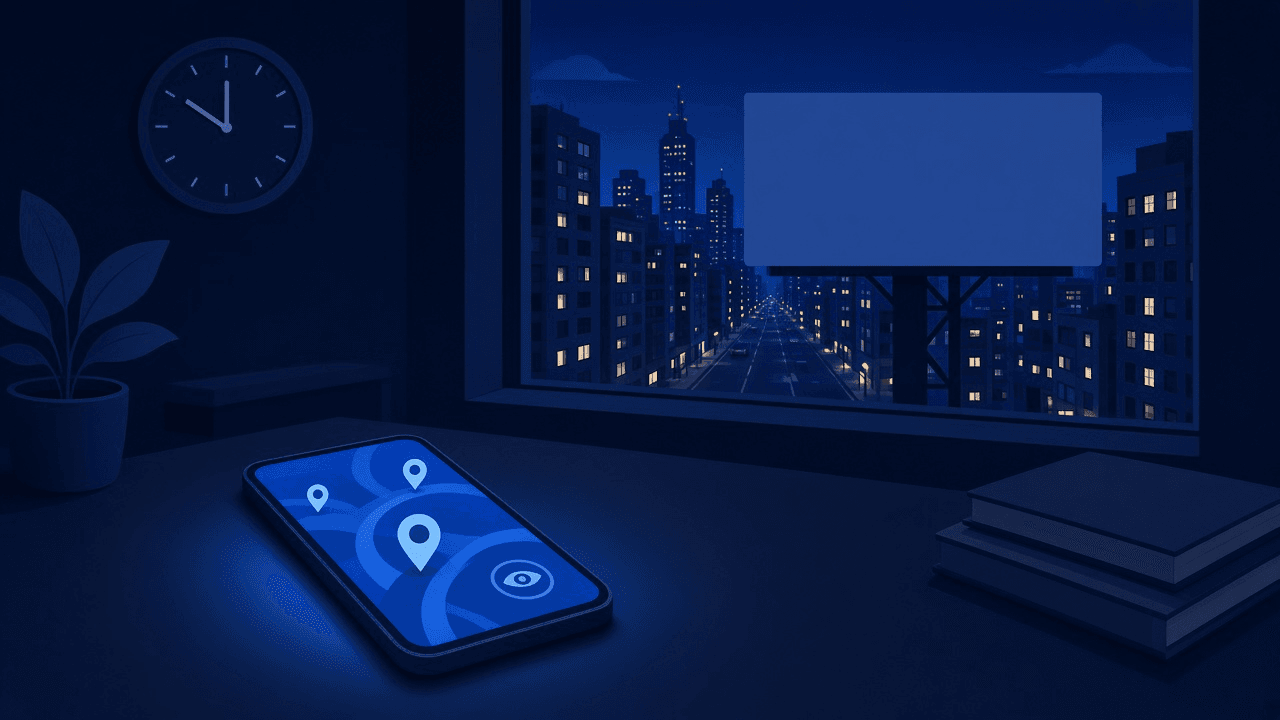
Tuesday, 5:40 p.m.: you send the PDF proposal to the agency on WhatsApp. Tuesday, 10 p.m.: the media planner opens the file on her phone, likes three sites and forwards it to the advertiser. Wednesday morning, the advertiser asks whether one location can be swapped and whether the two-week cycle starting November 16 is still free. Nobody tells you. On Friday, you call to ask whether they "had a chance to look". The answer: "The client already closed with the media owner who replied yesterday."
The scene is made up, but anyone who sells OOH recognizes every step. The problem wasn't price or location. It was the darkness between sending and hearing back. Here is how to read interest signals, when to do your proposal follow-up and how to shorten the back and forth until approval.
A PDF is a blind proposal
A proposal sent as an attachment stops being yours. You don't know whether they opened it, when, how many times, or whether they forwarded it to the advertiser. All you have left are WhatsApp's blue ticks, which say the message was seen, not that the PDF was read.
And a PDF ages the minute it goes out: if another proposal closes one of the sites tomorrow, the agency's file still says it is available.
| After sending | PDF by email or WhatsApp | Proposal as a tracked link |
|---|---|---|
| Did they open it? | You don't know | The view is recorded |
| When and how often? | You don't know | Date and number of views |
| Was it forwarded? | Only if someone tells you | New visitors and devices show up as a hint |
| Versions | "proposal_v3_final.pdf" | One address for the agency and the advertiser |
| Approval | "Go ahead" lost in a chat | Confirmation on the proposal page itself |
What a study on leads teaches OOH
In March 2011, Harvard Business Review published "The Short Life of Online Sales Leads", by James B. Oldroyd, Kristina McElheran and David Elkington. The authors audited 2,241 U.S. companies, timing how long each took to respond to a web-generated test lead, and analyzed 1.25 million sales leads received by 29 B2C and 13 B2B companies in the United States.
In the study, "qualify" means having a meaningful conversation with a key decision maker. In the audit, 37% of companies responded within an hour, 16% within one to 24 hours and 24% took more than 24 hours.
The study is about leads that arrive online, when someone fills out a form asking to be contacted, at U.S. companies. It is not about out-of-home proposals in Brazil. Nobody can claim your proposal closes seven times more often if you call within an hour.
What you can take from it is the principle: interest has a short shelf life, and whoever talks to the client while they are still thinking about it gets ahead of whoever shows up later. In OOH, the moment the agency's planner opens your proposal is the equivalent of the lead who has just filled out the form. With a PDF, that moment passes without you seeing it.
The interest signals that are worth a call
With the proposal as a link, a view becomes information. The signals below are likely readings, not certainties: use them to decide when to act.
| Signal | What it may indicate | What to do |
|---|---|---|
| Opened right after sending | The planner is building the plan right now | A short message in the same part of the day, offering help with questions or site swaps |
| Came back several times | Comparing options or building the presentation for the client | Send a ready alternative (nearby site, another two-week cycle) before they ask |
| New visitor | Another device or city: the proposal was probably forwarded to the advertiser | Ask the agency whether the advertiser wants to adjust anything and mention how long availability holds |
| Opened after hours | Someone is working on the proposal on their own time | Reply first thing the next business day, not at 10 p.m. |
| Nothing in 48 hours | They didn't see it, or the message got lost | Resend the link with one line of context, through another channel if needed |
| Opened, came back, went silent | An unspoken objection: price, site or timing | Ask directly what is holding it up and offer a plan B |
Nobody likes to hear "I saw you opened it at 10:13 p.m." The signal is for choosing the time and topic of your contact, not for showing that you were watching. Say "just checking whether you had any questions about the sites on the avenue", not "I saw you opened it three times".
A proposal follow-up cadence for OOH
"Hi Carla! Just checking whether you had any questions about the sites in the [brand] proposal. If it helps, I put together an alternative with the same budget and one more site near the mall. Availability for the November 16 cycle is guaranteed until Thursday."
The 6 to 10 rounds of back and forth before the yes
Anyone who sells OOH knows the script. Between the agency's request and the approved campaign, it is common for the negotiation to go through 6 to 10 interactions: emails, messages, calls and new versions of the proposal. That is not a survey figure; it is the picture the market knows firsthand. A typical cycle:
| Stage | What happens | Where time goes |
|---|---|---|
| 1. Brief | The agency asks for sites in a market, the period and the budget | Questions that come back because data was missing |
| 2. Proposal | PDF with sites, photos and price | Building the file and checking availability in the spreadsheet |
| 3. Availability | "Is the November 16 cycle free?" | Checking again, at the risk of having already sold it |
| 4. Site swap | The advertiser wants another location | A new version of the PDF |
| 5. Negotiation | Discount, bonus days, agency commission | Back and forth by message |
| 6. Client approval | The agency takes the proposal to the advertiser | You don't know whether it did |
| 7. Confirmation and IO | "Go ahead" becomes an insertion order | Approval scattered across email and WhatsApp |
| 8. Reservation | The site is blocked | If nobody blocked it, risk of double booking |
Every round is a chance for the agency to look at another media owner. Shortening the cycle means cutting the stages that only exist because the information is sitting in a static file:
A proposal with no reply is not a lost proposal. It is a proposal you can't see.
Why it matters now
Brazil's two-week cycle 44.26 started on Monday, October 19. According to the table published by Vooz Mídia Exterior, the remaining cycles are 46.26 (Nov 2 to 15), 48.26 (Nov 16 to 29, with Black Friday on Nov 27), 50.26 (Nov 30 to Dec 13) and 52.26 (Dec 14 to 27). This is when the agency wants everything yesterday and the same brief reaches several media owners. Whoever answers first, with the right proposal, gets the face.
Where Hivestr comes in
Hivestr is the ERP and CRM built for OOH and DOOH media owners, used by more than 350 media companies. Its proposal was designed precisely to end the blind proposal:
Assisted migration is free for those who become customers. The Hivestr team imports sites, photos and clients from an Excel spreadsheet and a Google Drive photo folder. Once the spreadsheet is complete, the map, the media kit and the photos are live in 10 minutes. The Hivestr video presentation shows the proposal from sending to approval.
Read also: Will the PDF proposal die in the OOH market? (in Portuguese)
Frequently asked questions about proposal follow-up
How long should I wait before following up on a billboard proposal?
There is no single deadline. Let the agency's behavior guide you: if the proposal was opened, reach out in the same part of the day or at the start of the next business day; if it has not been opened in 48 hours, resend it through another channel.
How do I know whether the agency opened the proposal?
With an attached PDF, you can't. With the proposal as a link and view tracking, you see whether, when and how many times it was opened. In Hivestr, the status changes to Viewed and proposal analytics show views, visitors, device and location.
Why does out-of-home negotiation involve so much back and forth?
Because sites, period, availability and price change during the conversation, and each change creates a new version and a new round of confirmation. It is common for the cycle to take 6 to 10 interactions until approval.
What does the agency need to approve a proposal online?
Just open the link in a browser. In Hivestr, the agency or the advertiser sees the map, sites, photos and investment and confirms the campaign on the page itself. On approval, the site is reserved automatically.
How much does it cost to try Hivestr?
The trial is 7 days free and requires no credit card. For those who become customers, assisted migration is free.
Stop sending proposals in the dark.
Build the proposal with a map, send the link, see when the agency opened it and get 1-click approval, with the site reserved on the spot. 7 days free, no credit card.
Try 7 days free →Want to see it first? Watch the video presentation.
Sources: James B. Oldroyd, Kristina McElheran and David Elkington, "The Short Life of Online Sales Leads", Harvard Business Review, March 2011 (a study of online leads in the United States, cited here as an analogy); Vooz Mídia Exterior, 2026 and 2027 two-week cycle table; Hivestr (features). The 6 to 10 interaction cycle describes a common market practice, not the result of a survey. The opening scene is illustrative. Data checked on October 19, 2026.
Your media company's whole operation
Inventory, proposals with online approval, CRM, campaigns, proof of posting and finance in one account. 7 days free to try.
Subscribe to the Hivestr newsletter
Get tips, OOH/DOOH industry news, and Hivestr content straight to your inbox.