
October 8, 2026
Empty faces: what to do with the inventory you didn't sell
Last-minute sales, bundles, barter, house ads, public service campaigns and online card sales: six ways to turn low occupancy into revenue
1 views
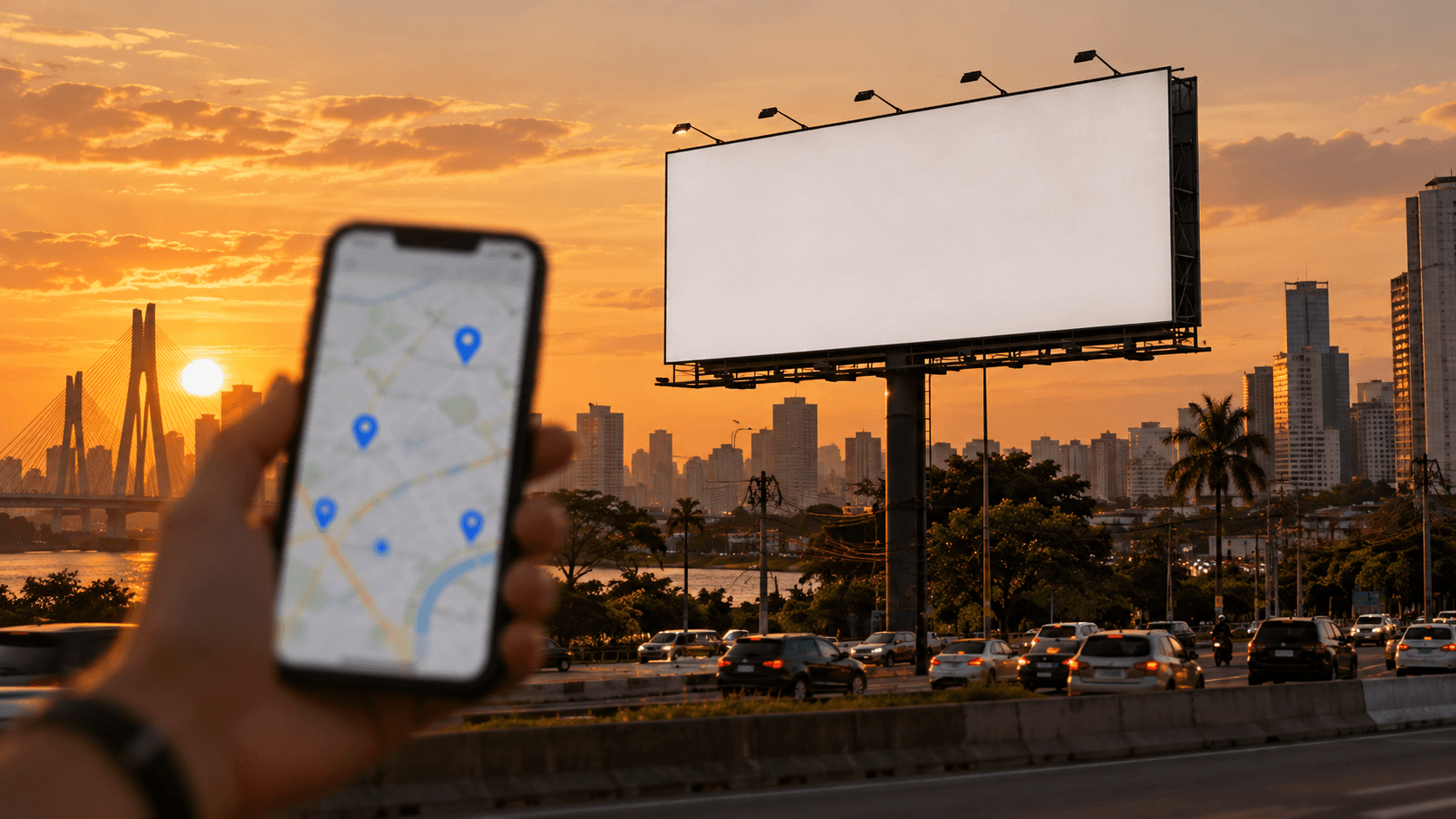
An empty face isn't just a site without an ad. It's revenue that never comes back. A posting period that goes by without a client can't be sold later, doesn't sit in stock and doesn't go on sale next month. Outdoor media is a perishable product, just like an airline seat or a hotel room.
And yet many media owners treat unsold inventory as inevitable. They wait for the phone to ring, and when the period starts, the site is there, lit up, with nobody paying for it. In this article we show six practical ways to turn empty faces into revenue, relationships or brand. And one of them changes the logic of how inventory gets sold.
What an empty face costs
The Brazilian outdoor year is split into 26 two-week posting periods. Every period that goes unsold is a slice of that site's annual revenue that simply disappears. Meanwhile, site rent, power and maintenance keep coming in as usual.
The cost of a site is fixed. Revenue is what's optional. Every empty face is margin walking out the door without making a sound.
Last-minute sales
With two or three weeks to go before the period starts, there's still time to sell. The key is having a list of clients willing to decide fast: local retail, events, store openings, real estate launches, concerts and parties.
If every empty face becomes a clearance sale, clients learn to wait until the last minute to buy cheap. Use special terms selectively, ideally for new clients or in bundles, and never advertise last-minute discounts publicly as a rule.
Opportunity bundles
Instead of selling a cold site on its own, pair it with a strong one. The client gets the site they wanted plus extra coverage, and you fill inventory that would sit empty without lowering the price of the main site.
"Book the main avenue billboard for Black Friday and get special terms on two neighborhood sites in the same period." Perceived value goes up, the main site keeps its rate card price and the cold sites stop sitting at zero.
Barter
Not every face needs to turn into cash. If the site would be empty anyway, trading it for products or services your business already pays for is a way to cut costs.
The rule is simple: barter only with inventory that would truly be empty, and always record it as a sale at rate card value, so your occupancy and revenue numbers stay clean.
House ads
Your company is an advertiser too. An empty face is the perfect place to say "advertise here," with a phone number, QR code or website. The people driving past are exactly the local business owners who could become clients.
Keep a house ad ready for every format. That way no site is left with a faded old poster or a black screen, which sends a bad message to anyone considering advertising with you.
Public service campaigns
Vaccination drives, blood donation, pet adoption, winter clothing drives, causes in your city. Donating an empty face to a cause earns goodwill for your company, brings you closer to public institutions and nonprofits, and can become content for your social media.
Add a discreet signature from your company to the artwork. It's media you wouldn't sell, working for your brand.
Online sales, by card
All the previous strategies depend on someone at your company offering the inventory. This one is different: the advertiser buys on their own, at any time, without talking to sales.
Think of the small advertiser who drives past your site, likes the location and wants to advertise for two weeks. Today they have to find your contact, request a proposal, wait for an answer, negotiate and receive an invoice. Many give up halfway. For them, the ideal would be what happens when they buy a plane ticket: see what's available, pick the dates and pay.
That's exactly what Hivestr Store enables. Media owners using Hivestr can place their live media kit and inventory map on their own website. Advertisers browse the sites, see photos, location and real availability, choose the period and pay by credit card. It works for static and digital inventory, OOH and DOOH.
Small advertisers don't want to negotiate. They want to see, choose and pay. Whoever makes that easy fills the face a competitor leaves empty.
Build your occupancy plan
None of these strategies works alone. What works is having a clear sequence for every face still open as the period approaches:
| When | What to do |
|---|---|
| Always | Inventory live in the online store, with map and media kit on your website. |
| 6 weeks before | Opportunity bundles pairing strong sites with cold ones. |
| 3 weeks before | Last-minute list for clients who decide fast. |
| 1 week before | Barter with suppliers or site owners. |
| Still unsold | House ad or public service campaign. Never a dark face. |
Media owners who treat occupancy as a process, not as luck, stop losing money in silence. And once inventory is available for online purchase, part of that occupancy starts happening with no effort from the sales team.
Your inventory for sale, 24 hours a day.
Hivestr is the ERP and CRM built for OOH, DOOH, TV and radio media owners. Live media kit, inventory map on your website and credit card sales through Hivestr Store, with every purchase flowing straight into your sales workflow.
Start your 7-day free trial →The per-period percentage is based on the Brazilian calendar of 26 two-week posting periods per year (1/26 ≈ 3.8%). For barter deals, consult your accountant on the proper tax treatment.
Subscribe to the Hivestr newsletter
Get tips, OOH/DOOH industry news, and Hivestr content straight to your inbox.